
In its November 2020 issue (#396), the scientific journal The Lancet, recently known for the controversy surrounding a study on hydroxychloroquine, delivers a remarkable study on height differences and growth patterns among teenagers worldwide. The study also provides data on the reasons behind these many disparities.
“Height and body-mass index trajectories of school-aged children and adolescents from 1985 to 2019 in 200 countries and territories: a pooled analysis of 2181 population-based studies with 65 million participants”

The study by the numbers
Let’s discover some numbers related to this gigantic study:
- 1,393 collaborators around the world contributed to the development of this study.
- 2,181 populations were studied around the world.
- 35 years were necessary for the study.
- 65 million people were audited.
- 200 countries were studied.
- Ages 5 to 19 was the age range of the population studied.
Study findings
The study highlights different conclusions:
- A 8-inch difference was observed between the countries with the tallest teens and those with the lowest averages.
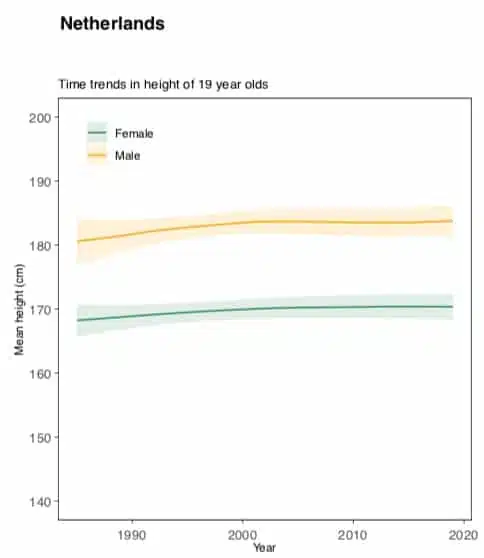
- The tallest teenage boys are Dutch, averaging 6 ft.
- The tallest teenage girls are also Dutch, averaging 5 ft 7 in.
- The shortest teenage boys come from Timor-Leste, averaging 5 ft 3 in.
- The shortest teenage girls come from Guatemala, averaging 4 ft 11 in.
- French teenage boys average 5 ft 8½ in and rank 34th in the global rankings.
Notable observations
The Lancet study highlights some particularly interesting findings:
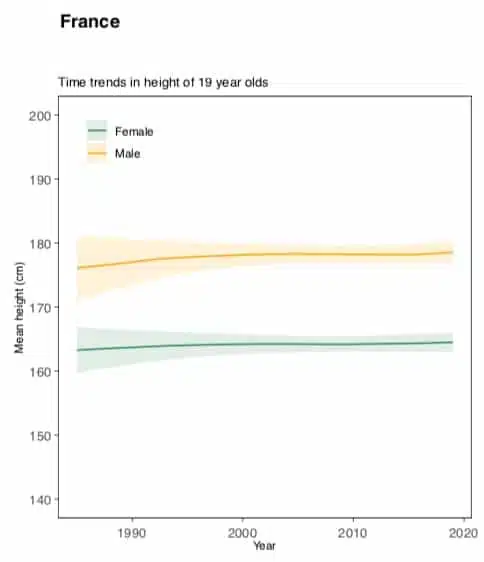
- French 19-year-old boys reach the same height as Dutch 16-year-olds.
- French 19-year-old girls reach the same height as Dutch 14-year-olds.
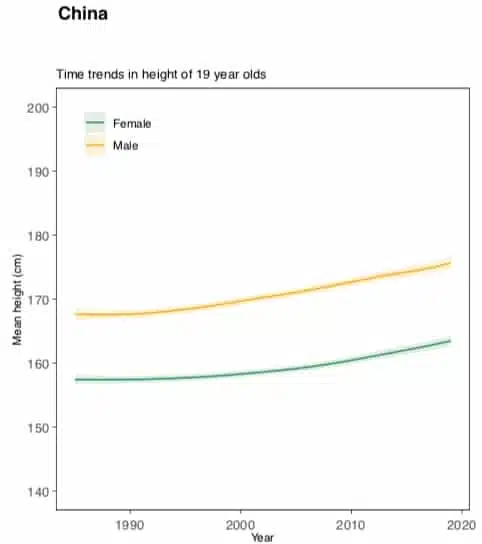
- In China, 19-year-old boys gained an average of 3.2 inches in height over 30 years.
- Also in China, girls gained an average of 2.4 inches over 30 years.
- Countries experiencing internal conflict or war showed the least progress in height growth.
- French teenage girls gained just over ½ inch over 30 years.
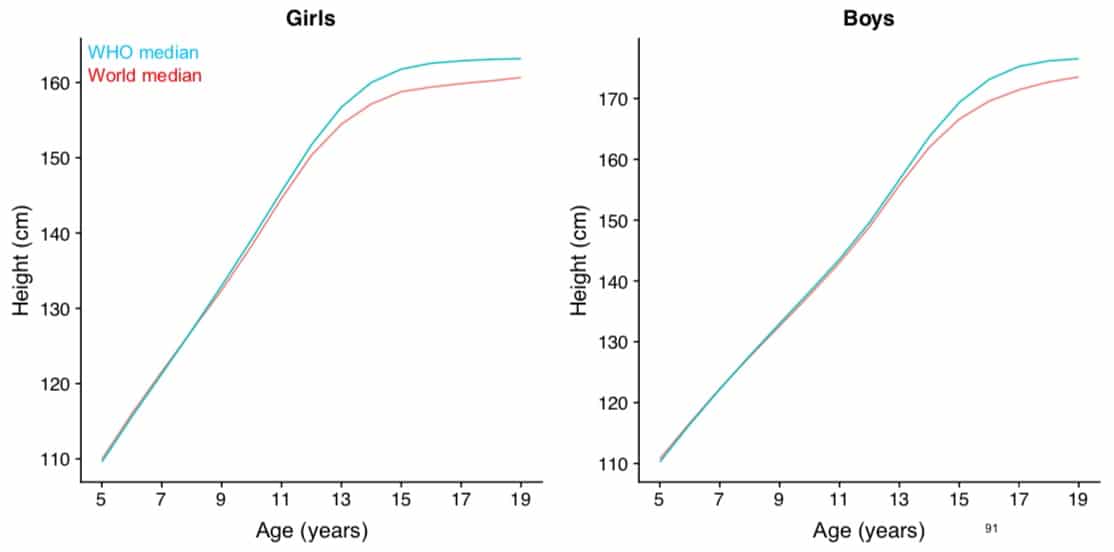
- The average height at age five is the same across all countries.
- The countries with the greatest increases in average height are concentrated in Asia (shown in red and orange on the chart below).
- Conversely, those with the smallest increases are in Sub-Saharan Africa (shown in pink on the chart below).
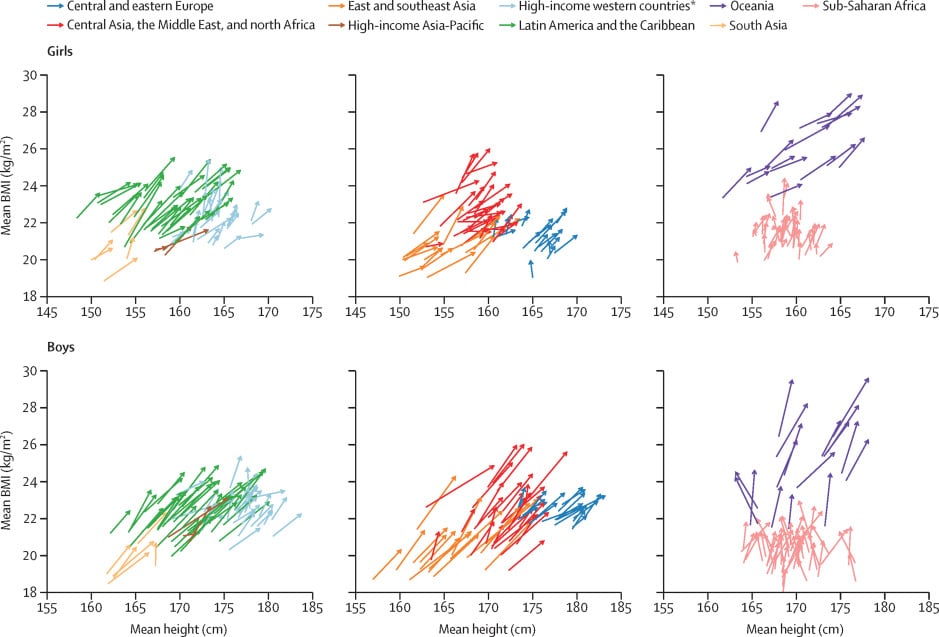
- Oceania takes the crown as the continent with the biggest jump in Body Mass Index, especially among boys.
- Latin American countries also put up some seriously impressive numbers.
- The overwhelming majority of countries saw gains in both average height and average BMI.
In which countries are adolescents the tallest?
Top 3 for female teenagers:
- Netherlands
- Montenegro
- Denmark
Top 3 for male teens:
- Netherlands
- Montenegro
- Estonia
In which countries are adolescents the shortest?
Top 3 for female teenagers:
- Guatemala
- Bangladesh
- Nepal
Top 3 for male teenagers:
- East Timor
- Laos
- Solomon Islands
The reasons for these differences
Here are the key factors explaining the differences in teen height trends around the world.
- The 3 main drivers behind the variations in average height between countries are:
-
- Diet and nutrition
- Economic conditions
- The country’s level of public health infrastructure
- Dr. Andrea Rodriguez Martinez, the lead author of this monumental study, points out that genetics plays only a minor role compared to nutrition and environment when it comes to increases in a population’s average height.
- She also notes that targeted nutritional programs aimed at early childhood and the school-age years, reaching the population broadly, have the greatest impact on raising the average height of teenagers.
The study in charts
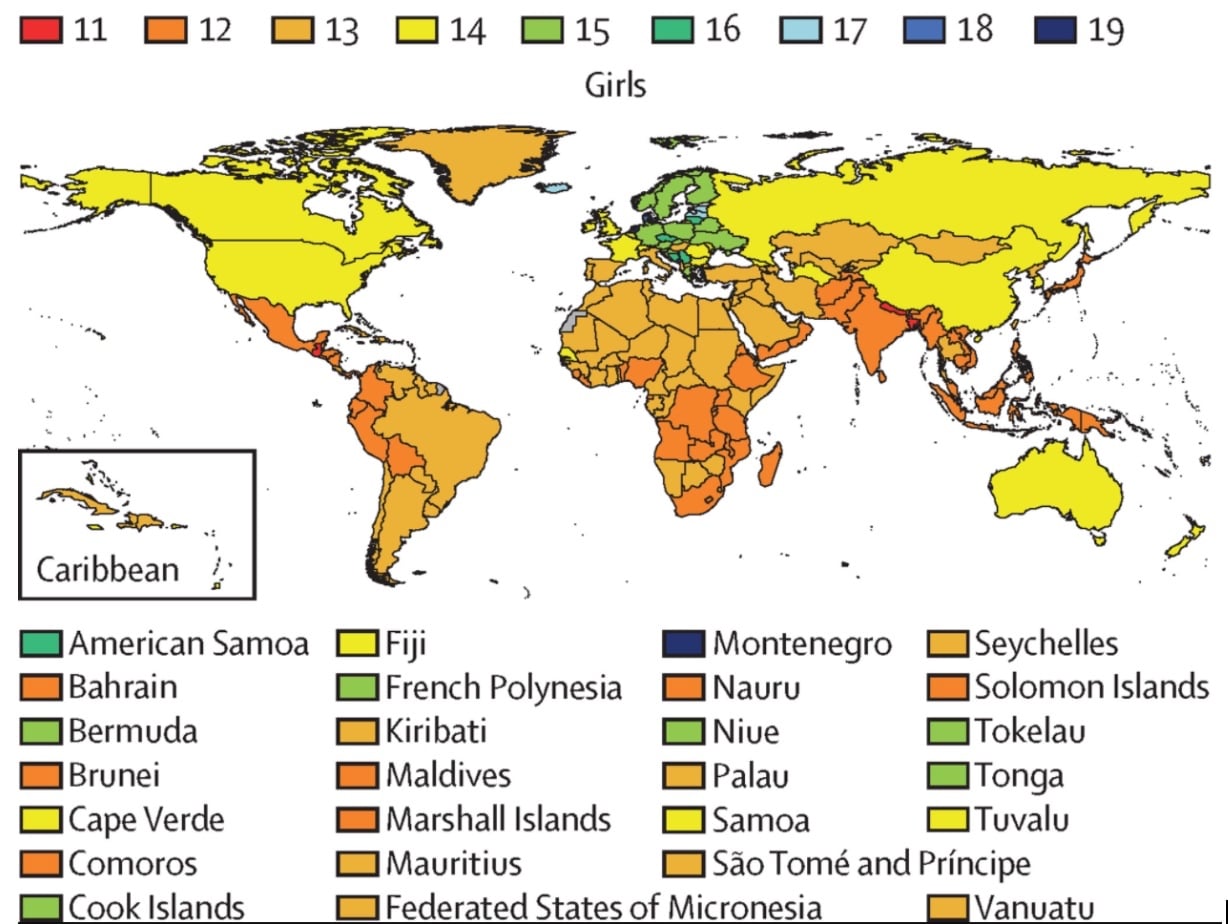
Age of Dutch female teenagers when a country’s teenager reached his maximum height:
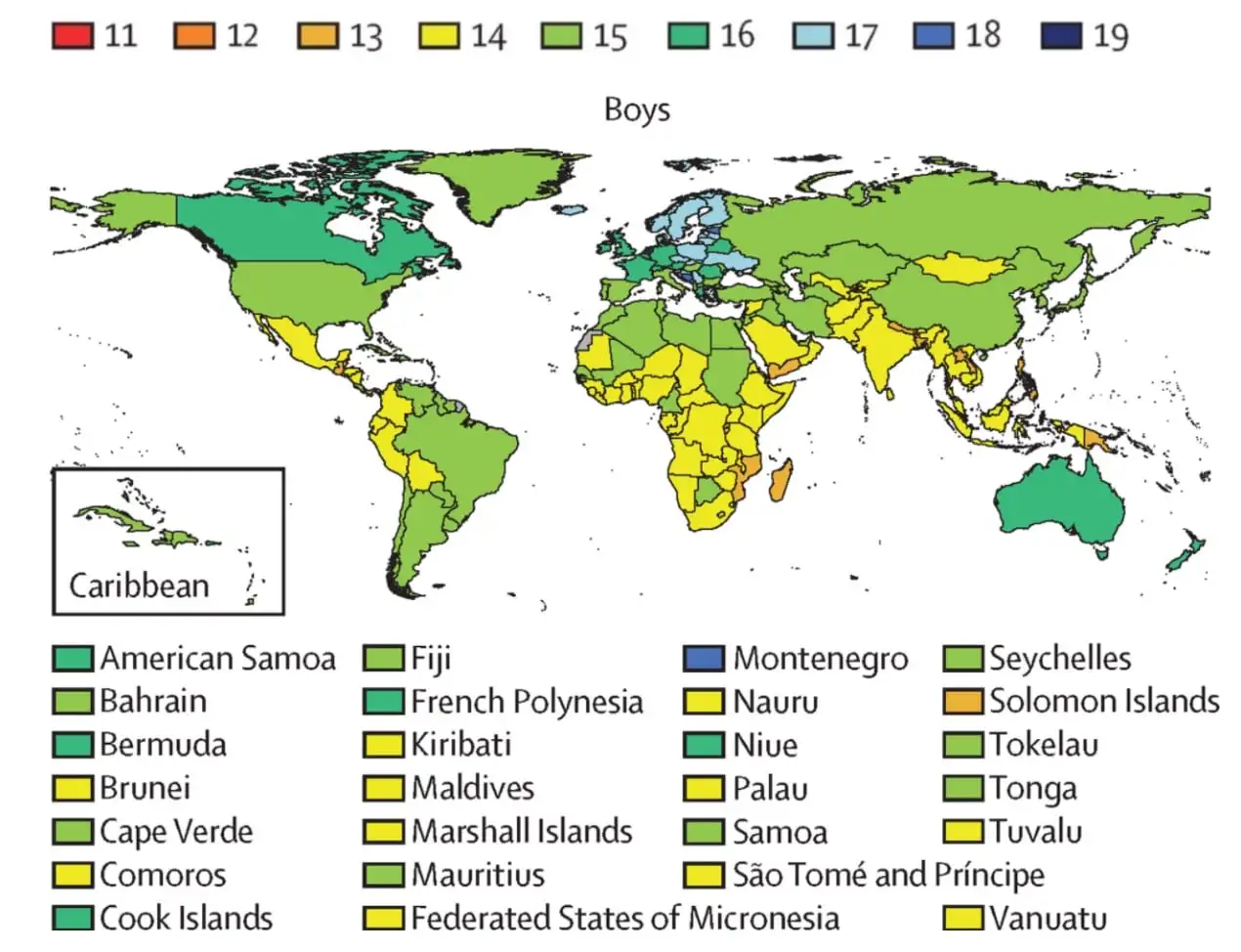
Age of Dutch male teenagers when a country’s teenager reached his maximum height:
Evolution of French growth over the years:
Evolution of China (very strong evolution):
Comparison between the median size of the world population (since the World Health Organization) and that of adolescents born in 2000 (worldwide):
Conclusion
This wide-ranging study, available on The Lancet website, helps us better understand the growth factors at play for children and teenagers. It reinforces a study published a year ago on Wetall about the key determinants of growth (What Factors Determine Our Growth? The Complete Study).
It’s striking to see just how fundamental diet and nutrition are to the healthy physical development of populations, disparities that show up clearly in the average heights of countries around the world, as previously discussed (Which Country Has the Greatest… Average Height).
Local policies around food access and school nutrition programs therefore have a major role to play in the healthy development of younger generations, both for supporting proper growth and for steering clear of the pitfalls of junk food and overeating. It’s worth remembering that overeating now causes more deaths globally than undernourishment. Good health starts with what you eat, and that holds true for every age group and every country on earth.
Sources:
- The Lancet: https://www.thelancet.com/journals/lancet/home
- World Health Organization: https://www.who.int/en/
- National Nutrition and Health Program (France): https://www.mangerbouger.fr/