
In the spring of 2000, a 19-year-old center from England played in the McDonald’s All-American Game in Oakland. He was listed at 7 ft 6 in, the tallest player ever to appear in the event. Zach Randolph was on the other roster. Gerald Wallace, Chris Duhon and Luke Ridnour were in the same gym. Those three went on to play more than 2,800 NBA games between them.
Neil Fingleton played none. He finished his college career with 34 games and 254 total minutes, retired from basketball at 26, and became an actor instead. His story is usually told as a tragedy about a giant. It reads better as a case study in what American basketball does with height, and how little of that is about the player.
The résumé
| Item | Detail |
|---|---|
| Born | December 18, 1980, Durham, England |
| Adult height | 7 ft 7.56 in (232.6 cm), measured for Guinness World Records in 2007 |
| Position | Center |
| High school | Holy Name Central Catholic, Worcester, Massachusetts, 1997 to 2000 |
| Honors | McDonald’s All-American and third-team Parade All-American, 2000 |
| Colleges | North Carolina, 2001 to 2002; Holy Cross, 2002 to 2004 |
| NBA draft | Undrafted, 2005 |
| Pro teams | Boston Frenzy (ABA), Tees Valley Mohawks (England), CB Illescas and CB Ciudad Real (Spain) |
| Died | February 25, 2017, Durham, England, aged 36 |
Two of those lines are worth staring at together. He was one of the two dozen best high school seniors in the United States in 2000. He was undrafted five years later, in a draft with 60 picks.
What a seven-footer is worth here
In 2011 Pablo Torre worked the numbers for Sports Illustrated using CDC height data. His estimate: no more than about 70 American men between 20 and 40 stand 7 ft or taller, and roughly 17 percent of them play in the NBA. An American man between 6 ft 6 in and 6 ft 8 in has about a 0.07 percent chance of the same thing.
Two caveats before anyone quotes that at a party. It is an estimate of American men only, built from survey data, and it is an upper bound rather than a census. And Fingleton was not American, so he was never part of that denominator. But the figure describes the environment he walked into at 16. In the United States, a man that tall is not an oddity to be stared at. He is a commodity with a market, and the market found him within a year of his arrival.
It found him early and it found him hard. By his junior year he was averaging 18 points, 14 rebounds and seven blocks, ranked a top-50 national recruit, and described as the largest center prospect in the country. North Carolina flew him to Chapel Hill on a private jet. Boston College, Wake Forest, Ohio State, Notre Dame and Connecticut were all in it at some stage. He picked North Carolina, Michael Jordan’s school, and said his goal was the NBA.
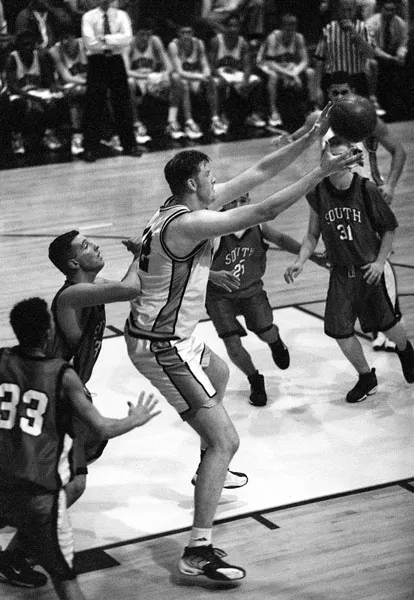
Durham to Worcester at sixteen
He did not grow up with the game. He was a soccer and field hockey kid who had barely handled a basketball outside gym class. He hit 6 ft at eleven, then added ten inches between thirteen and fourteen and arrived at 7 ft. At that point soccer stopped working for him.
The man who redirected him was Tony Hanson, an American who had played at Connecticut and was coaching club basketball in England. Hanson put him on his team, got him to a Connecticut summer camp in 1995, and argued that the American school system was the only place he would get real coaching. In 1997 Fingleton moved to Worcester, Massachusetts, alone, at 16. He was homesick for a year and the city took him in. A friend of his coach acted as a surrogate parent.
His family was tall without being medically unusual. His father was about 6 ft 1 in and his mother about 6 ft. His older brother is 6 ft 8 in and his older sister about 6 ft 2 in. A great-great-grandfather was reported at 6 ft 10 in. Nothing in the record points to gigantism or a hormonal disorder; he was the far end of an already tall family, which is also the case for most of the men in our ranking of the tallest athletes of all time.
The class of 2000
The McDonald’s All-American Game is the closest thing American basketball has to a certificate of future value. Here is what the certificate was worth to the players around him.
| 2000 McDonald’s All-American | NBA career |
|---|---|
| Zach Randolph | Long NBA career, two-time All-Star |
| Gerald Wallace | Long NBA career, All-Star and All-Defensive honors |
| Chris Duhon | Long NBA career as a starting and reserve guard |
| Luke Ridnour | Long NBA career as a starting and reserve guard |
| Darius Miles | Drafted third overall in 2000, straight out of high school |
| Jared Jeffries | Drafted eleventh overall in 2002 |
| Neil Fingleton | Undrafted, no NBA appearance |
He was the tallest man in that building by a foot, and the only one of those seven who never signed an NBA contract.
The back
The break point is not a scouting judgment. It is surgery. He had a back operation in August 2000, between high school and college, and spent his first year at North Carolina on a medical redshirt. The coach who recruited him had left. When he finally got on the floor it was for four minutes in a loss to Davidson on November 20, 2001. That is his entire North Carolina career: one game, four minutes.
He transferred to the College of the Holy Cross in 2002 and played two seasons there.
| Season | School | Games | Total minutes | Points per game | Rebounds per game |
|---|---|---|---|---|---|
| 2001 to 2002 | North Carolina | 1 | 4 | n/a | n/a |
| 2002 to 2003 | Holy Cross | 21 | 146 | 2.9 | 1.6 |
| 2003 to 2004 | Holy Cross | 12 | 104 | 2.3 | 1.8 |
| Career | 34 | 254 | 2.6 | 1.6 |
Four hours and fourteen minutes of college basketball. He took a history degree in 2004.
German-language coverage of his life says he came into his own at Holy Cross and collected individual and team awards there. The team awards are real, because Holy Cross were winning in the Patriot League. The individual ones are not in the record. The honors on his résumé all date from high school, before the operation.

Undrafted, then the leagues below
He signed with the Boston Frenzy of the American Basketball Association in 2004 and was waived that December. He went undrafted in the 2005 NBA draft. The Austin Toros took him in the fifth round of that year’s NBA Development League draft, and there is no record of him playing a game for them.
From December 2005 he played for the Tees Valley Mohawks in England, then moved to Spain in November 2006 for CB Illescas and CB Ciudad Real. An injury finished him in 2007, at 26, the same year Guinness certified him as the tallest living man in Britain and the European Union. He also told interviewers he had played in Greece and Italy; no club in either country appears on his record and we could not find one.
What the tallest men who did make it had
It is tempting to say he was simply too big to play, and the NBA record says otherwise. Men as tall as him have had real careers.
| Player | Listed height | Listed weight | NBA games |
|---|---|---|---|
| Gheorghe Mureșan | 7 ft 7 in | Heavy-framed center | 307 |
| Manute Bol | 7 ft 6.75 in | 200 lb | 624 |
| Shawn Bradley | 7 ft 6 in | Listed around 275 lb | 832 |
| Yao Ming | 7 ft 6 in | Listed above 300 lb | 481 |
| Tacko Fall | 7 ft 6 in | 311 lb | 37 |
| Slavko Vraneš | 7 ft 6.5 in | Not reliably listed | 1 |
| Neil Fingleton | 7 ft 7.56 in | Listed at 308 lb in 1999 | 0 |
Manute Bol is the useful comparison, because he destroys the easy explanation. Bol played at about 200 lb with a body mass index of 15.3, could reportedly bench press 44 lb ten times when he arrived, and still played 624 games and blocked 2,086 shots, retiring with more blocks than points. Being thin at that height is a disadvantage, not a disqualification.
Fingleton was not thin. He was listed at 308 lb at 18 after adding 40 lb in one off-season, and squad listings later in his career put him at 370 lb. What he did not get was a healthy development window. The surgery came at 19, the year a center normally learns to move. Everything after it was managed minutes. Our survey of the tallest basketball players of all time is largely a list of men whose careers turned on exactly that question, and Olivier Rioux, now 7 ft 9 in and playing Division I basketball, is the current test case.
The broader point for anyone tall reading this: height buys you an invitation, not a career. Our piece on the best sports for tall people goes into where the advantage actually converts.
The second career
He started acting in 2011 and this is how most people know him.
| Year | Production | Role |
|---|---|---|
| 2011 | X-Men: First Class | Russian General’s Bodyguard #1 |
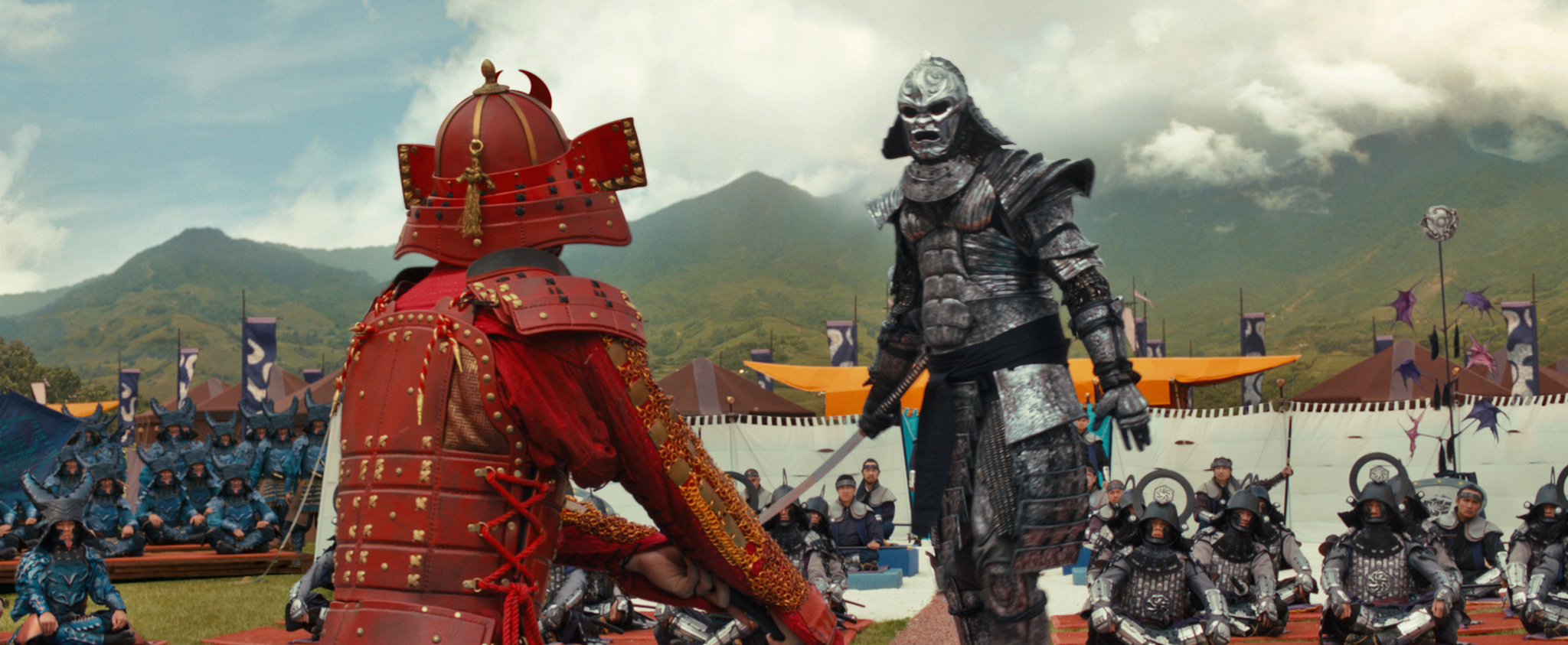
| 2013 | 47 Ronin, with Keanu Reeves | Lovecraftian Samurai |
| 2014 to 2017 | Game of Thrones | Mag the Mighty, and a giant wight |
| 2015 | Jupiter Ascending | Sargorn, fight sequence |
| 2015 | Avengers: Age of Ultron | Motion capture for Ultron |
| 2015 | Doctor Who, season 9 | The Fisher King |
The X-Men claim, corrected
A lot of coverage says Fingleton played a mutant in X-Men: First Class, and some of it moves him into a later X-Men film entirely. Neither is accurate. His 2011 credit is Russian General’s Bodyguard #1: an unnamed heavy standing behind a Soviet officer, and his only appearance in the franchise. The parts that mattered were Mag the Mighty, the giant who attacks the Wall in season four of Game of Thrones, and the Fisher King in Doctor Who, where he wore the suit and other performers supplied the voice.
One correction to the Game of Thrones trivia while we are here. Hafthor Björnsson, who played Gregor Clegane from season four, is 6 ft 9 in. Fingleton had nearly eleven inches on him and was the tallest person on that production. We cover the full picture in the tallest actors in cinematic history.
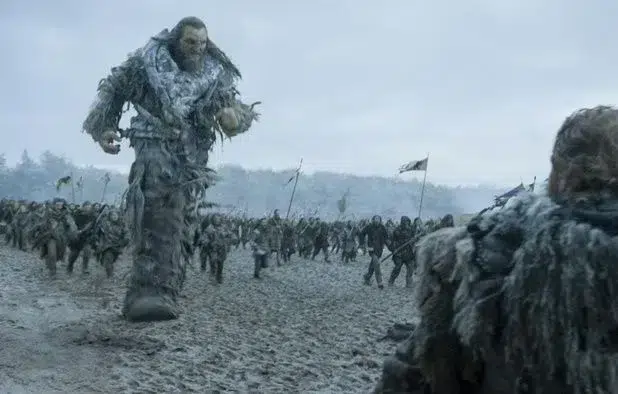
He was clear-eyed about the work. He expected to be typecast, said he was waiting for parts that would suit him, and told one interviewer he wanted to play a Bond villain.
He died at 36
Fingleton died on February 25, 2017, at his home in Durham, England. He was 36, not 37, a detail several obituaries got wrong: born December 18, 1980, died February 25, 2017. British newspapers reported heart failure. His brother disputes that and says the cause was pneumonia, a position he states in Big Smooth, the documentary about Neil’s life, named for a nickname he picked up in Massachusetts. We have found no public finding that settles it, and we are not going to pick one.
Worcester had a stake in him too. The documentary premiered in Massachusetts, in the city that had taken in a homesick English teenager in 1997. The 17 percent figure says an American seven-footer has a one-in-six shot at the NBA. Fingleton had the invitation, the scholarship, the All-American jersey and the frame, and the number that ended up next to his name was 254 minutes.
Sources
- Neil Fingleton, Wikipedia, for the career record, the measured height and the dispute over the cause of death
- Neil Fingleton college statistics, Sports Reference
- 2000 McDonald’s All-American rosters, RealGM
- Fingleton lifts Tar Heels into top five, ESPN, November 30, 1999, for the recruiting picture and his 1999 listed size
- Gulliver’s Travels, Sports Illustrated, August 23, 1999, for his growth curve and his family’s heights
- Seven-footers: 17 percent chance of playing in the NBA, The Boston Globe, March 9, 2014, reporting Pablo Torre’s Sports Illustrated analysis of CDC data
- Manute Bol and Tacko Fall, Wikipedia, for the comparison heights, weights and games played
- This Gulliver travels in jersey and sneakers, The Christian Science Monitor, February 14, 2000
- Genial giant Neil Fingleton would love to play a Bond villain, June 22, 2014
- Big Smooth documentary, The Boston Globe, February 8, 2023